
There’s something pretty magical about desserts that lean into simplicity and still manage to feel indulgent. Tres leches cake belongs to that rare category. It doesn’t rely on elaborate decoration or complicated techniques. Instead, tres leches is to win you over with its beautiful texture, moisture, and that unmistakable milky sweetness that lingers long after the last bite.
Across Latin America, this cake tends to show up at birthdays, family gatherings, and celebrations where food carries memory. It feels familiar even if you’re tasting it only for the first time, and that’s part of its charm.
A Cake That Drinks (Quite Literally)
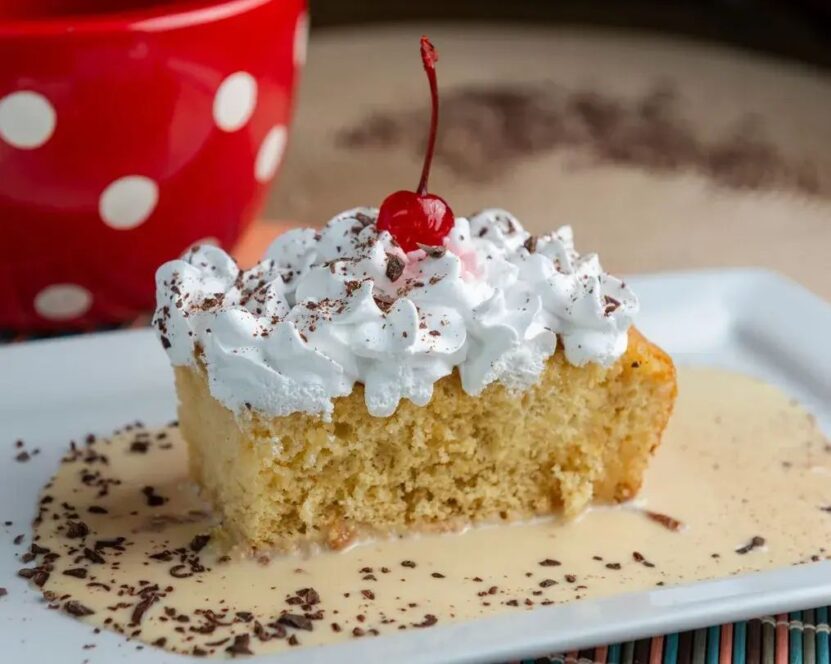
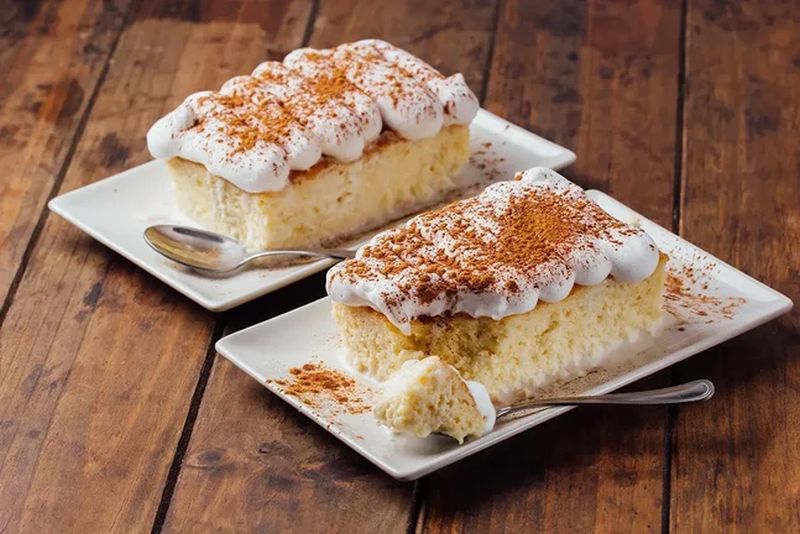
At first glance, tres leches looks like a soft sponge cake that’s been topped with whipped cream. Nothing unusual there. But the moment you cut into it, you notice the difference. The crumb feels heavier, almost custard-like, yet it still holds its shape.
The secret lies in what happens after baking. Once the cake cools, it’s pierced all over and soaked in a mixture of three types of milk. Tres leches meaning lies in the fact that the soaking process transforms the texture completely.
Instead of turning mushy, the sponge absorbs the liquid evenly. As a result, it becomes moist without collapsing. So what you taste is delicate, but not fragile, and rich, but not overwhelming.
Why The “Three Milks” Matter?
The name of this dessert isn’t just poetic; it’s literal. “Tres leches meaning or direct translation is “three milks,” and each one plays a role in shaping the final taste.
Here’s what will go into that soak:
- Evaporated milk: This brings a slightly caramelised depth to it
- Sweetened condensed milk: The thick milk adds the required sweetness and body
- Heavy cream or whole milk: This milk softens the mix and balances the richness
When bought in together, they create a liquid that feels indulgent without relying on heaviness. Also, it seeps into the cake slowly and gives every bite a creamy finish.
You can create your own versions by tweaking the ratios or swapping ingredients. But the basic idea stays the same: a trio of milks working together rather than competing.
Why Texture Sets It Apart
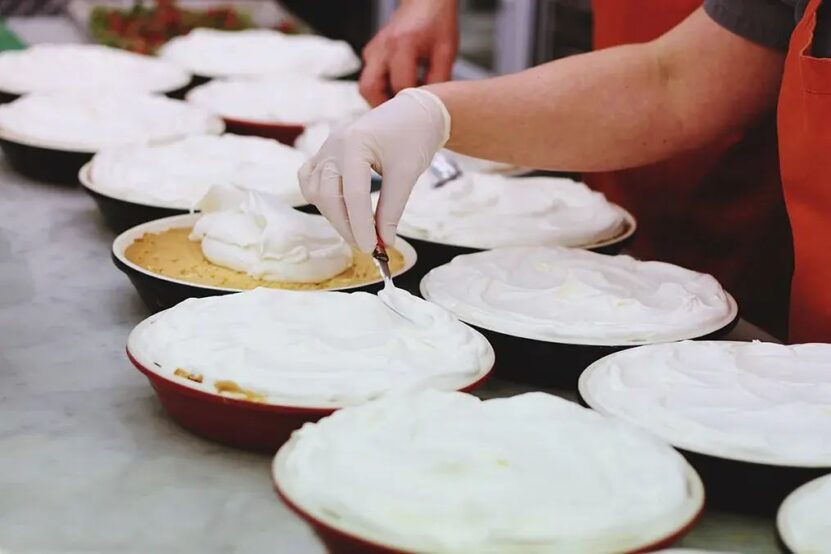
One of the most interesting things about tres leches is how it challenges expectations. A cake soaked in liquid should logically fall apart, yet this one holds together with surprising structure. That comes down to the sponge itself.
The base is intentionally light, often made with whipped eggs to create air pockets throughout. Those pockets act like tiny reservoirs, allowing the milk mixture to settle evenly instead of pooling at the bottom.
Because of that, each bite feels consistent. There are no dry patches and no overly soggy sections. The texture sits somewhere between cake and pudding, which is what makes it stand out from more traditional baked desserts.
Another detail worth noticing is how the sweetness behaves. It doesn’t hit all at once. The milk soak spreads it evenly, giving a smooth, mellow finish instead of a sharp sugary spike. That balance is what keeps people coming back for another slice.
A Backstory with More Than One Version
Ask where tres leches came from, and you’ll likely hear a few different answers. But many believe the cake took shape in Latin America, especially in countries like Mexico and Nicaragua. It’s also where it remains deeply rooted in local food culture.
Also, the recipes for tres leches began appearing on cans of condensed milk in the early 20th century. That helped spread the idea across regions, hence giving home cooks a starting point to adapt and personalise it to their taste.
The Making of That Signature Texture
Tres leches doesn’t begin as a dense cake. In fact, quite the opposite, it starts with a light sponge, often made without butter or with very little fat. That airy structure matters greatly as it’s what allows the cake to absorb the milk mixture without falling apart.
Once it’s baked and cooled, the process gets a little hands-on:
- The surface gets poked all over (no need for perfection here)
- The milk mixture gets poured slowly, letting it soak in
- The cake rests in the fridge, often overnight
That resting time makes all the difference. And once the liquid settles, the flavours blend, and the cake turns into something far more interesting than what you started out with.
Common Mistakes That Change the Outcome
Even though tres leches is simple in concept, a few small missteps can change the final result more than expected.
A common issue is using a cake base that is too dense. A heavy sponge won’t absorb the milk properly, which leads to uneven texture. Some parts may feel dry while others turn overly saturated.
Another mistake comes from rushing the soaking stage. Pouring all the milk at once might seem efficient, but it doesn’t give the sponge enough time to absorb it evenly. A slower pour allows the liquid to distribute properly.
Chilling time is another factor people underestimate. The cake needs time to settle so the flavours can blend. Skipping this step often results in a dessert that tastes separated rather than cohesive.
Finally, overloading it with toppings can take away from its identity. While additions are welcome, the base flavour should still be noticeable. That balance is what keeps the dessert true to its roots.
How It Adapts Across Cultures
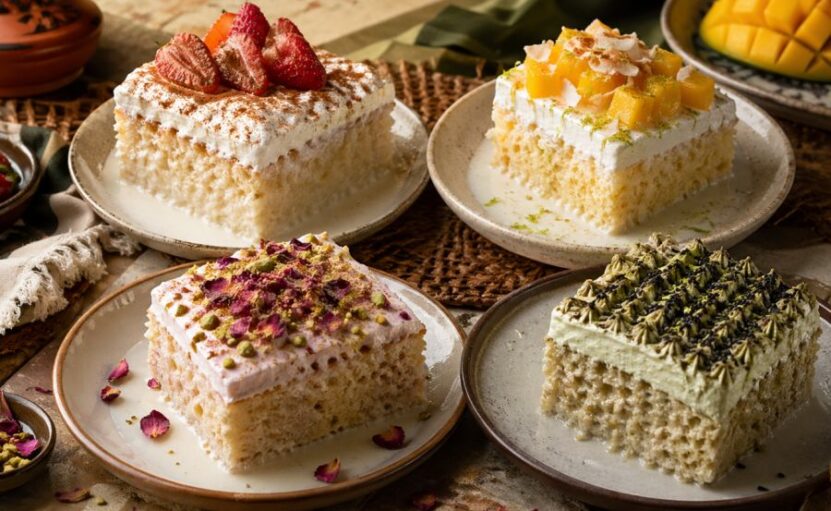
As tres leches traveled beyond Latin America, it naturally picked up regional influences. In parts of Europe, especially the Balkans, a variation known as trileće became popular, often finished with a caramel topping instead of whipped cream.
In other regions, coconut milk, almond milk, or even additional layers of flavour are introduced. Some versions lean slightly less sweet, while others push further into richness with added syrups or liqueurs.
Despite these differences, the core idea remains intact. A sponge cake soaked in milk, designed to deliver a soft, creamy texture without losing structure. That consistency across variations is what keeps it recognisable, no matter where you try it.
Closing Note: Create Your Own Twists
Traditionally, the cake gets a layer of whipped cream on top. But from there, things can shift depending on your preference:
- A dusting of cinnamon for warmth
- Fresh fruit for contrast
- A drizzle of caramel or dulce de leche for extra indulgence
- Flavours like coffee, chocolate, or coconut
- Or add a splash of rum or liqueur
Tres Leches is the sort of cake where one bite turns into another. And before you know it, you’ve gobbled down the whole thing.